

Visual Culture 200 (2026)
INTRODUCTION TO CULTURE JAM
Students identified an advertisement from a company which communicates or implies a message that might be useful in terms of increasing consumer desire for the product depicted, but which could have negative implications for people and society more broadly. The company benefits from increased sales, while the public viewing the advertisement may have their thoughts and opinions shaped in ways that could lead to negative outcomes such as lower self-esteem, immoral or unhealthy behaviour. The students were tasked with changing subtle elements within the advertisement, which at first glance might not be highly noticeable, but upon deeper reflection reveal to the viewer what was problematic about the original messaging of the advertisement.The Facade of Identity: Postmodern Architecture’s Legacy in the UAE Pavilion by Jené Fourie (She/Her) and Kayla Ferreira (She/Her)
Jené and Kayla really surprised me by making the difficult argument that identity politics has evolved from a focus on individuals to a concern with national identity and state power. They have responded to the brief with lateral thinking and engaged in much self-directed research to put together this essay. Their perspective is nuanced and thoughtful, and the presentation of the video essay is clean and engaging.
The Yes Men & Situationist International by Amoré Badenhorst (She/Her), Sorin Conradie (She/Her), Britney Cronje (She/Her), Anushka Boshoff (She/Her), and Lohan van Jaarsveld (She/Her)
Amoré, Anushka, Britney, Lohan, Sorin have chosen a great topic for their essay, and have made an excellent argument to link the work of contemporary artist-activists to the ideas and approaches of the Situationists in the 20th Century. They have shown clearly how art movements evolve in response to changing cultural, technological and historical contexts. The video is well-produced and effectively communicates their research.
Visual Culture 200 (2025)
MASS CULTURE CRITICAL ESSAY
Students identified a mass culture phenomenon observed in present-day society and used the theories and arguments presented throughout the semester in order to define, interpret and critique their chosen phenomenon. They presented an in-depth look at the various cultural and ideological factors that influence it, and commented on these using theories learned in class, and those identified from additional academic research.
Havaianas: Mass Culture Phenomenon and Brazilian Identity by Tábata Huf (She/Her)
In this essay Tábata provides insight into how branding and ideology have been used to transform a simple rubber sandal into not only a symbol of Brazilian identity but also a global status product. What sets this essay apart is Tábata’s ability to explain how an objectively cheap and standardised product has been associated with idealised and escapist caricatures of the Brazilian lifestyle in a way that allows people from all classes of society to feel part of a bigger identity when purchasing the product. By linking observations from her own life experience to the theories learned in class, Tábata has demonstrated her ability to digest the ideas of visual culture and use them to better understand the world around her.
Brewing Meaning: Starbucks as a symbol of Mass Culture by Jené Fourie (She/Her)
Jené explains how a strategic positioning of Starbucks coffee shops as a ‘third place’ transformed coffee drinking from a utilitarian act into a “marker of taste, class, and cultural identity” which is standardised across global locations. Jené has done well in demonstrating how the very same system that displaced intimate community spaces like streetsides cafés sells a repackaged, anonymous version back to consumers at a higher price. Jené has used insights from her studies to counter and question the simple marketing messages of the Starbucks brand and reveal how the manipulation of consumer desires is complex and intentional.
Visual Culture 200 (2024)
INTRODUCTION TO CULTURE JAM
Students identified an advertisement from a company which communicates or implies a message that might be useful in terms of increasing consumer desire for the product depicted, but which could have negative implications for people and society more broadly. The company benefits from increased sales, while the public viewing the advertisement may have their thoughts and opinions shaped in ways that could lead to negative outcomes such as lower self-esteem, and immoral or unhealthy behaviour. The students were tasked with changing subtle elements within the advertisement, which at first glance might not be highly noticeable, but upon deeper reflection reveal to the viewer what was problematic about the original messaging of the advertisement.
Culture Jam of an Under-Aged Sexual H&M Advertisement by Rosemary Steynberg (She/Her)
Rosemary chose an advertisement for schoolwear from H&M, in which two young girls are posed in a manner typical of adult fashion models, accompanied by the text “Make those heads turn in H&M’s back to school fashion”. Rosemary identifies the fact that the girls have been treated in a sexual manner that is common with adult models, but is not appropriate for depictions of children. Rosemary says that she “based [her] culture jam on the controversial thought that young girls should turn heads”
In order to expose the problems inherent in the original advertisement, Rosemary focused on the way in which these young girls have been objectified. By changing the tagline to “buy H&M’s clothes to catch his eye. Grade 5 doesn’t have to be boring” Rosemary draws the viewer’s attention to the broader issue of the objectification of women, and specifically to how this is not appropriate for younger girls. What makes this project so successful is that very little was changed, yet once one realises the implications of the changes one is deeply affected by the new message contained in the image.
INTRODUCTION TO FOUNDATIONAL MOVEMENTS OF POSTMODERNISM VIDEO ESSAY
For this assignment students needed to find a contemporary artist whose work has been influenced by a 20th Century Postmodern movement on the deepers levels of the philosophies, beliefs and ideologies of the historic movement, while remaining unique and relevant to the 21st Century context. In order to do this, students presented their research on the background and context of the original movement, and showed how these could be related to the contemporary artist. Students worked in groups, and put together a video essay, using the possibilities of combining sound, text and images to carry their argument across more powerfully.
Cindy Sherman: A 21st Century Artist Shaped by Identity Politics by Carissa Claassens, Jeanine Rabie and Jade Swanepoel
The group was able to make a compelling link between the ways in which the Identity Politics movement of the late 20th century laid the foundations on which Cindy Sherman built her artistic career, and the ways in which she communicates the messages within her work. The research into both the postmodern movement and the contemporary artist is well selected and clearly presented to the viewer. The group has made good use of the unique opportunities for communication enabled by the video essay format. They have selected an artist who does not merely imitate the visual output of the 20th Century movement, but instead one that has built upon and expanded concepts in a way that is relevant in current times.
INTRODUCTION TO MASS CULTURAL PHENOMENON
Students identified a mass culture phenomenon observed in present-day society and used the theories and arguments presented throughout the semester in order to define, interpret and critique their chosen phenomenon. They presented an in-depth look at the various cultural and ideological factors that influence it and commented on these using theories learned in class, and those identified from your additional research in academic writings.
This second project entailed students firstly providing a hermeneutic interpretation of a visual text of their choosing, and then critically analysing the same interpretation using a selection of the theories studied in VC200. Students were asked to adopt two distinct ‘voices’ when doing this critical analysis, looking at their interpretation with theoretical detachment to identify any ideologies or biases present in it.
Everyone I Have Ever Slept With (1963-1995): An Interpretation and Critique by Marié van Urk (She/Her)
Maria presents a nuanced and thoughtful interpretation of a provocative work by controversial artist Tracy Emin, and arrives at this interpretation by incorporating a variety of different perspectives, including her own. Maria is also able to step back and take a critical look at this interpretation and use the distance afforded by theoretical analysis to gain deeper insights into the work’s meaning, as well as her personal relationship to it.
By choosing a complex work that deals with challenging themes, Maria was able to demonstrate how the subjective meaning of an artwork can be made more accessible and universal through the application of theory and critical perspectives. She was able to contrast her personal and social context as the viewer with that of the artist, and explain how this affects her experience and understanding of the work
The Mass Cultural phenomenon ‘Core’ explored through Grungecore by Kurt Schwimmbacher (He/Him)
Kurt makes an astute observation that Tiktok users tend to typify and commodify particular fashion subcultures by affixing ‘core’ to whichever subgroup and aesthetic that they feel like they belong to. He argues that companies use this phenomenon to co-opt innovations in fashion that originate from individuals, and turn these into products that are easily packaged and sold. He contrasts grunge, which emerged as an anti-commercial and anarchic expression of youth culture at the end of the 20th century, with grungecore, which is an inauthentic and ready-to-buy imitation of the original.
Kurt not only identified an appropriate topic, but he was able to articulate how mass media has been used to change something from a genuine expression of human creativity and turn it into a product that will enrich corporations. He used theories learned in class to show how the use of certain codes allows consumers to feel that by buying a particular product, they also lay claim on the values purportedly associated with it.
Related Posts

























































































































Souvenirs from the Future Exhibition | 19 April
You can expect an exciting programme…
Film Arts Honours Exhibition | 12 April
You can expect an exciting programme…


You the Living – Film Screening
In the Swedish city of Lethe, people…

Susters
Susters - Exclusive Screening - Open…

The Pitch
Do you have a story to tell? A film…

Savanah Xanthides
Alumni - Savanah Xanthides. A…

Welcome Party | 16 February
We are having our Annual Welcome Party.…

High Tension | 15 February
Date: Thursday at 19:00–21:00. Venue:…
Three Theories of Everything | 15 February
Three Theories of Everything: A lecture…
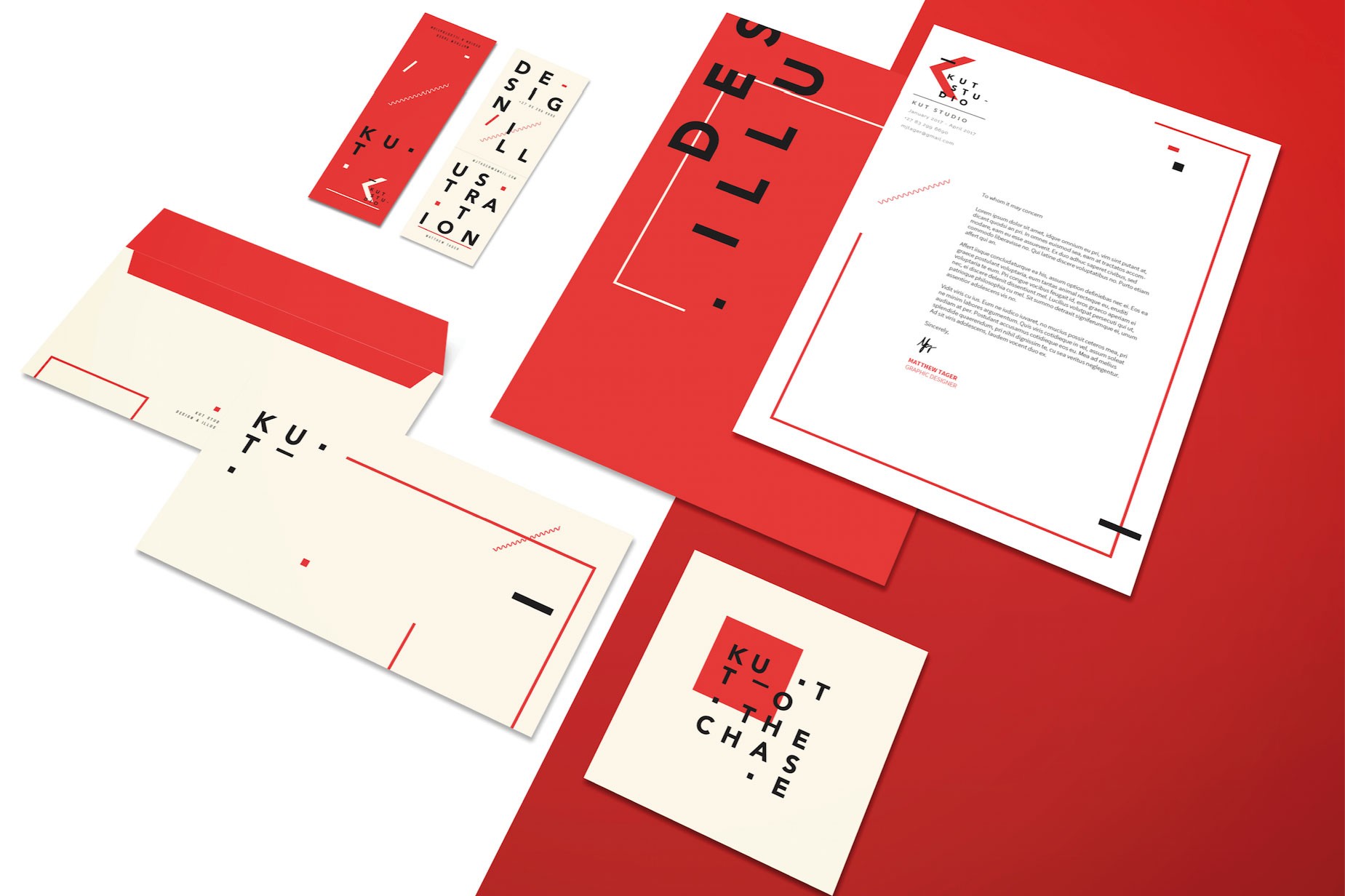
Matthew Tager
In my final year, I grew the confidence…

Stephanie de Beer
I'm currently a full-time Digital…

Are You Game | 2018
Have an unusual game idea? Don't keep…

Are You Game Winner | 2017
Are You Game Winner: Koketso Kana. Game…

Lize-Marie Dreyer
At Aurora we have the overwhelming need…
Final Year Student: Exhibition | 28 November
The annual Final Graduate Showcase, for…

David Krynauw- Industrial Talk
David Krynauw Ontwerp produces…

Game Jam
Game Jam Event

Blood sweat and Fears
Blood sweat and fears- Open Window…

Annike Pienaar
Do what you love, Love what you do. I’m…